TRT Lancelot: The Modern Condensed Typeface with a Sharp Edge
When you're working on a project that needs to make an immediate impression—whether it's a poster for an event, the header of a website, or the logo for a new brand—the choice of typeface is foundational. You need something that commands attention without sacrificing clarity. This is precisely the space where TRT Lancelot excels. It’s a modern condensed typeface that blends a compact, space-efficient structure with distinctive design details, offering a unique tool for designers and creators who want their work to stand out with confidence.
Understanding the Visual Identity of TRT Lancelot
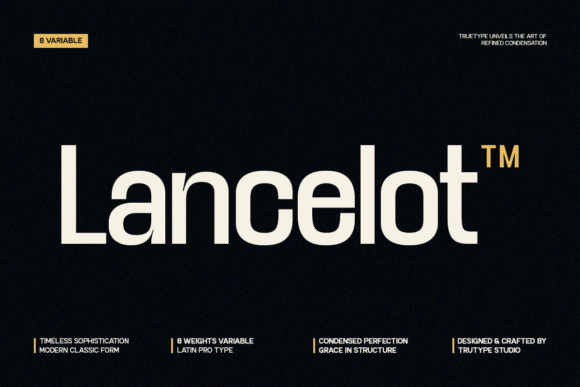
At its core, TRT Lancelot is a display font designed for impact. Its condensed nature means the characters are narrower than a standard typeface, allowing you to fit more text into tight spaces like headlines, banners, or sidebar titles. But what truly defines its character are the inktrap details. These are small, sharp cuts or notches at the joints of certain letters. Historically, inktraps were functional, preventing ink from spreading and clogging during printing. In digital design, they've evolved into a stylistic feature, adding a technical, precise, and slightly edgy quality to the letterforms.
The font family includes a full range of weights, from the delicate Thin to the powerful Extra Bold. This spectrum is crucial. A Thin weight might be perfect for an elegant, minimalist subheading, while the Extra Bold can create a headline that feels like a visual punch. The overall personality is one of clean geometry meeting expressive shapes. It’s not a cold, sterile sans serif; the inktraps and subtle curves give it a distinctive voice that feels both contemporary and crafted. This balance ensures that TRT Lancelot maintains excellent readability even at smaller sizes, a critical factor for any premium font intended for professional use.
Where TRT Lancelot Truly Shines: Practical Applications
The versatility of TRT Lancelot is one of its greatest strengths. It’s not a one-trick pony meant for a single application. Its design allows it to adapt to a wide array of projects, making it a valuable asset in any designer's toolkit.
- Branding and Logo Design: For startups and businesses in tech, fashion, or creative industries, a condensed, bold font can convey efficiency, modernity, and strength. TRT Lancelot in its heavier weights can form the core of a powerful logo design, creating a mark that is instantly recognizable and scalable from a business card to a storefront.
- Editorial and Publishing: In editorial design, hierarchy is everything. Using TRT Lancelot for chapter titles, pull quotes, or section headers in a magazine or book creates a strong visual hierarchy that guides the reader's eye. Its condensed form is particularly useful for fitting impactful text into narrow columns or over complex images.
- Marketing and Social Media: In the fast-scrolling world of social media graphics, you have milliseconds to grab attention. A bold, clean headline set in TRT Lancelot can stop the scroll. It works brilliantly for event posters, promotional banners, and video thumbnails where clarity and impact are non-negotiable.
- Digital and Web Design: While primarily a display font, it can be used effectively in web design for hero section headlines, call-to-action buttons, or feature titles. Its compact nature helps maintain a clean layout without sacrificing the visual weight needed to anchor a page.
- Packaging and Physical Products: On product packaging, especially for items with limited label space, a condensed typeface is invaluable. TRT Lancelot can deliver a brand name or product descriptor with clarity and style, whether it's on a coffee bag, a cosmetic bottle, or artisanal goods.
Think of it as a creative font that bridges the gap between a rigid, industrial condensed style and a more refined, expressive one. It’s a sans serif font in the broadest sense, but its personality sets it apart from the hundreds of neutral options available.
Making It Work for Your Project: Practical Guidance
Choosing a typeface is a strategic decision. Here’s how to evaluate if TRT Lancelot is the right fit for your next project.
Evaluating the Fit
First, consider the project's tone. Does it call for a modern, assertive, and slightly technical feel? If the project requires a soft, traditional, or highly whimsical aesthetic, a script font or serif font might be a better choice. TRT Lancelot is built for projects that value clarity, efficiency, and contemporary style. It’s a font that says, "We mean business," without being aggressive.
Testing Font Pairings
No font is an island. The true test of a display font like TRT Lancelot is how it pairs with others. A classic strategy is to pair a bold, expressive display font with a neutral, highly readable body font. For body copy, consider a clean sans serif font like Inter, Roboto, or a readable serif font like Lora or Merriweather. The contrast between Lancelot's condensed, ink-trapped headlines and a simple, open body font creates a dynamic and professional visual hierarchy.
Reviewing the Styles and Licensing
Before purchasing, explore the entire weight range. Do you need the Thin for delicate accents, or are the Medium and Bold weights sufficient for your primary use case? Also, pay close attention to the commercial font licensing. Ensure the license covers your intended use—whether for a single client project, unlimited digital use, or embedding in a mobile app. Responsible licensing is a key part of professional design assets management.
Readability at Scale
Always test the font in context. Set your headline in TRT Lancelot and your body text in your chosen partner font. View it at the size it will be used—on a printed poster, a desktop screen, and a mobile phone. The inktraps that add character at large sizes should not hinder readability at smaller scales, but this is a crucial step in the design process.
In the crowded landscape of modern typography, TRT Lancelot offers a distinct and practical solution. It’s more than just another condensed typeface; it’s a thoughtfully crafted tool for building strong brand identity, clear communication, and engaging visual narratives. By understanding its personality and testing it rigorously in your own projects, you can unlock its potential to make your designs not only seen but remembered.