Scramble: A Creative Font for Modern Branding
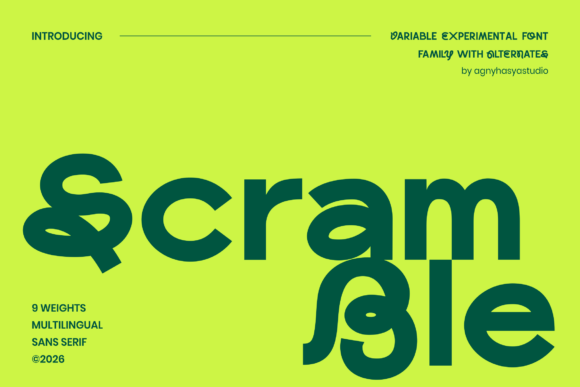
If you’ve spent any time scrolling through design feeds lately, you’ve probably noticed a shift. We are moving away from rigid, grid-locked designs and leaning into something more organic and expressive. This is where the Scramble typeface enters the conversation. It isn’t just another sans-serif font; it is a variable experimental typeface built to capture the feeling of fluid motion. For designers and business owners looking to break away from the static look of standard corporate typography, Scramble offers a way to inject energy and personality into visual communication.
Understanding the Visual Personality of Scramble
At its core, Scramble is defined by its unconventional letterforms. Unlike traditional sans-serif fonts that prioritize perfect geometric circles and straight lines, Scramble introduces a sense of movement. The characters feel like they are in a state of transition, which gives the font a very distinct, modern rhythm. It’s a premium font that doesn’t just sit on the page; it demands interaction.
The technical versatility of the family is a massive asset for creative professionals. It features a full weight range, spanning from delicate Thin styles to heavy, impactful Black weights. This gradient allows you to use Scramble as a cohesive system. You might use the lighter weights for subtle, artistic body text or captions, while utilizing the heavier weights for punchy headlines. This flexibility makes it a standout display font, but its utility goes far beyond just headers. It is a creative font that adapts to the context of your design, whether that context is a high-fashion editorial spread or a gritty streetwear brand identity.
Where Scramble Shines: Applications and Use Cases
The real value of a typeface lies in how it performs in the wild. Scramble excels in environments where grabbing attention is the primary goal. Think about poster design or editorial covers. In these scenarios, you have a split second to catch a viewer's eye. The unique, fluid nature of Scramble creates immediate visual interest because it breaks the expectation of what letters are "supposed" to look like.
For branding, this font is a powerful tool. If you are an entrepreneur or a small business owner in a saturated market, blending in is the worst thing you can do. Using Scramble in your logo design or brand collateral signals that your brand is forward-thinking and creative. It works exceptionally well for:
- Creative Agencies and Freelancers: It projects innovation and artistic capability.
- Music and Event Branding: The "motion" in the font mimics the energy of live events or sound waves.
- Editorial Design and Publishing: It adds a contemporary edge to magazine layouts and book covers.
- Packaging Design: For products that want to stand out on the shelf with a modern, artistic vibe.
However, it is important to exercise restraint. Because Scramble is so stylistic, it functions best as a display font. While it can be legible at larger sizes, using it for long paragraphs of small body text—like a legal disclaimer or a lengthy blog post—can fatigue the reader's eye. It is designed to be seen, not necessarily to be read in bulk. For the body copy of a website or brochure, consider pairing it with a highly legible serif font or a clean, neutral sans-serif font to maintain readability.
Strategic Implementation: Hierarchy and Pairing
One of the most common questions creatives ask is, "How do I pair this?" Because Scramble has such a strong personality, it requires a balancing act. You don’t want your design to feel chaotic. The goal is to create a clear visual hierarchy.
A practical approach is to let Scramble do the heavy lifting for your headlines. If you are designing a website, use the Bold or Black weight of Scramble for your H1 and H2 tags. This draws the user in. Then, switch to a stable, neutral font for your paragraphs. A classic sans-serif like Helvetica or a transitional serif like Georgia can ground the design, allowing Scramble’s artistic flair to pop without overwhelming the content.
When testing font pairings, pay attention to the x-height and the overall "color" of the text blocks. Scramble has a unique texture, so pairing it with a script font or handwritten font might result in too much visual noise. It generally pairs better with structured, geometric typefaces that provide a clean counterpoint to its fluidity.
Evaluating Fit and Licensing
Before integrating Scramble into a commercial project, you need to evaluate the fit. Does the brand voice match the font's personality? If you are designing for a bank or a law firm, the experimental nature of Scramble might undermine the trust and stability those industries need. But for a tech startup, a lifestyle brand, or an art portfolio, it is an ideal match.
It is also crucial to review the licensing. As a premium font, Scramble is an investment in your design assets. Ensure you have the correct commercial font license for your specific needs. If you are designing a logo for a client, they will likely need the license to use the font in their marketing materials. If you are using it for web design, check that the web font files are included in your package.
Finally, take advantage of the variable nature of the typeface. Don't just stick to the preset weights. If the file is a variable font, play with the slider to find the exact weight that balances your layout. This level of control allows you to fine-tune your typography to a professional standard, ensuring that your social media graphics, website headers, and print materials all look cohesive.
Final Thoughts on Modern Typography
Typography trends come and go, but the need for distinctiveness remains constant. Scramble represents a move toward more expressive, human-centric design. It acknowledges that communication isn't always about rigid structure; sometimes it's about feeling and flow. By incorporating this sans-serif font into your toolkit, you are equipping yourself to create designs that feel current, artistic, and undeniably engaging. Whether you are crafting a brand identity from scratch or refreshing a magazine layout, Scramble provides the tools to make your work stand out.