Rose Bloom: Merging Floral Art with Modern Typography
In the world of digital design, finding a font that balances legibility with personality is often a challenge. You want something that commands attention, but you also want it to tell a story. Enter Rose Bloom, a premium font that redefines the decorative sans-serif category. It is not merely a typeface; it is a visual experience that weaves intricate, hand-drawn roses and botanical leaves into every single character. For designers, entrepreneurs, and crafters, this font offers a unique opportunity to inject nature’s elegance directly into your typography without sacrificing the boldness required for high-impact projects.
The Anatomy of a Floral Typeface
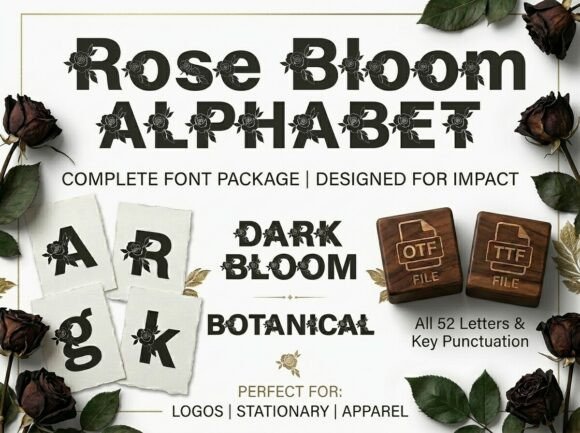
At its core, Rose Bloom is a study in contrasts. It features a bold, sans-serif foundation that ensures stability and readability, but it is adorned with delicate, romantic floral art. This creates a fascinating tension between modern typography and vintage botanical illustration. The letters are substantial enough to stand on their own, but the "Rose Bloom" details transform them into standalone illustrations. This style works particularly well for projects that need to feel personal and handcrafted, yet professional and polished.
Unlike a standard script font or a generic handwritten font, which can sometimes feel messy or difficult to read at smaller sizes, Rose Bloom maintains structure. The "bones" of the letters are strong, making it a viable option for headers, logos, and even short blocks of text where you want to make a statement. The botanical elements are not just pasted on; they are woven into the curves and strokes of the typeface, creating a cohesive flow that mimics the organic growth of a garden.
Where to Use This Creative Font
The versatility of Rose Bloom makes it a valuable addition to any designer's toolkit. Its aesthetic leans heavily into spring and summer themes, making it an obvious choice for seasonal marketing campaigns. However, its applications extend far beyond seasonal use. Here are some practical scenarios where this font shines:
- Brand Identity and Logo Design: If you are building a brand for a florist, a wedding planner, a high-end beauty salon, or a boutique hotel, Rose Bloom can serve as the cornerstone of your visual identity. It instantly communicates sophistication, care, and attention to detail.
- Packaging Design: Imagine this font on a box of artisanal chocolates, a bottle of botanical gin, or a line of organic soaps. The font adds texture and perceived value to the product, suggesting that the contents are as carefully crafted as the label.
- Social Media Graphics: In the crowded space of social media, stopping the scroll is everything. A bold header written in Rose Bloom can break the monotony of standard sans-serif fonts, adding a layer of visual interest that encourages engagement.
- Editorial Design and Publishing: For book covers, particularly in the romance or lifestyle genres, or for magazine headers, this typeface adds a layer of emotional resonance. It sets the mood immediately before the reader even processes the words.
- Crafting and Personal Projects: For hobbyists creating wedding invitations, greeting cards, or scrapbooking layouts, Rose Bloom provides a professional finish that is difficult to achieve with standard system fonts.
Strategic Typography: Readability and Perception
Choosing a decorative font involves more than just picking something that looks pretty; it requires an understanding of how type influences perception. Rose Bloom is a display font, which means it is designed to be seen at larger sizes. Using it for body copy in a dense paragraph would likely reduce readability. However, when used for headlines, it creates a strong visual hierarchy. The bold weight draws the eye, while the floral details reward the viewer for looking closer.
From a brand strategy perspective, using a creative font like Rose Bloom helps in building recognition. It is distinct enough that once a customer sees it, they are likely to remember it. This distinctiveness is crucial for small business owners looking to differentiate themselves from larger, more corporate competitors. It signals that your brand values aesthetics, nature, and elegance.
Practical Guide to Pairing and Licensing
One of the most common questions regarding decorative fonts is: "What do I pair it with?" Because Rose Bloom is so visually rich, it requires a quiet partner. Pairing it with a clean, geometric sans-serif font for your body text is usually the best approach. Fonts like Montserrat, Lato, or Open Sans provide a neutral background that allows the floral details of Rose Bloom to stand out without creating visual chaos. Avoid pairing it with other script fonts or highly detailed serif fonts, as this can make the design feel cluttered.
Before finalizing a design, it is always wise to test the font in context. View it at the actual size it will be printed or displayed. Check the spacing between letters (kerning) to ensure the botanical elements don't collide awkwardly with adjacent characters.
Finally, consider the licensing. If you are using Rose Bloom for personal projects like a birthday card for a friend, a standard desktop license is usually sufficient. However, if you are a business owner using the font on products for sale, on your website, or in client work, you must ensure you have the appropriate commercial license. Respecting font licensing protects you legally and supports the type designers who create these intricate assets.
Final Thoughts on Design Assets
Ultimately, Rose Bloom is more than just a set of characters; it is a design asset that bridges the gap between nature and digital art. It allows you to bring the beauty of the outdoors into your work with precision and style. Whether you are designing a logo for a new startup or creating a personal gift, this font offers a way to make your work feel timeless, elegant, and deeply personal.