Armin: A Typeface Woven with Artisan Soul
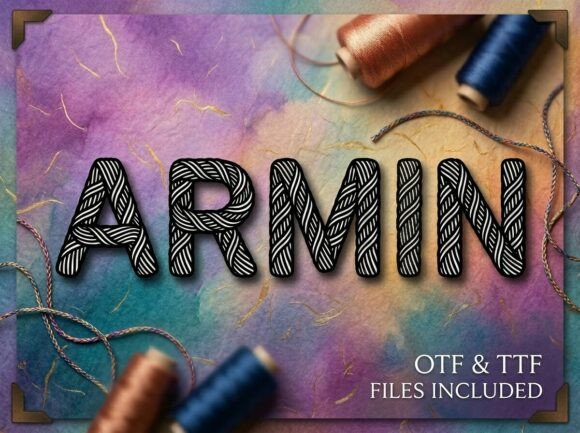
There’s a certain warmth in handmade objects—a texture you can almost feel through a screen. The Armin typeface captures that essence, translating the spirit of handcrafted textiles into a digital form. This isn't just another display font; it's a statement piece designed to evoke the cozy, tactile quality of a hand-knit sweater or a carefully tailored garment. Its bold, rounded letterforms are immediately approachable, but look closer and you’ll discover its defining feature: an intricate internal texture of rhythmic, hand-drawn "twisted rope" or "yarn" patterns. This unique detail bridges the gap between traditional textile arts and modern artisanal branding, giving any project a distinct, handmade-and-haberdashery soul.
The Anatomy of a Handmade Aesthetic
Armin’s visual personality is built on a foundation of heavy structural weight and cozy appeal. The thick strokes ensure high impact and legibility at larger scales, making it a natural display font. Yet, the rounded terminals and the subtle, organic irregularities within the woven texture prevent it from feeling cold or overly mechanical. It’s a premium font that feels personal. Think of it as the typographic equivalent of a chunky cable-knit stitch—substantial, comforting, and full of character. This style moves beyond the common categories of serif font or sans serif font, offering something more akin to a textured script font without the cursive connections, and more structured than a typical handwritten font.
Where Armin Truly Shines: Practical Applications
Understanding a font's strengths is key to using it effectively. Armin excels in projects where warmth, craftsmanship, and authenticity are central to the message. It’s not the font for a minimalist tech startup or a corporate legal firm. Instead, consider it for:
- Brand Identity & Logo Design: This is Armin’s sweet spot. It’s the premier choice for independent knitwear labels, boutique tailor logos, handcrafted home decor brands, artisanal bakeries, or specialty coffee roasters. A logo set in Armin immediately communicates a story of care and handmade quality, forming a memorable brand identity.
- Packaging & Labels: On a physical product, Armin’s textured appearance can create a tangible connection. Use it on product labels for homemade jams, artisanal soaps, or craft yarns. It reinforces the product’s handcrafted nature before the customer even touches it.
- Digital & Social Media: In the fast-scrolling world of social media, Armin acts as a visual anchor. Its bold weight and unique texture make social media graphics and headers for craft blogs or maker communities impossible to ignore. It translates the tactile feel of a craft into the digital realm, driving engagement.
- Editorial & Web Design: While primarily for headlines, Armin can inject personality into editorial design. Use it for pull quotes in a lifestyle magazine or as section headers on a web design project for a textile artist. Its character supports the story without overwhelming the body text.
Making Armin Work: Guidance for Your Projects
Choosing the right typeface is a strategic decision. Here’s how to evaluate and implement Armin effectively.
Evaluating Project Fit
Start with your core message. Does your project aim to convey warmth, tradition, and human touch? If yes, Armin is a strong contender. If the project requires sleek neutrality, opt for a clean sans serif font instead. It’s about aligning the font’s personality with your project’s goals.
Mastering Font Pairing
Armin has a powerful voice, so it needs partners that complement rather than compete. For body text, pair it with a highly legible, neutral modern typography workhorse. A clean sans serif like Montserrat or a simple, readable serif like Lora can provide excellent contrast. This pairing creates a clear visual hierarchy, allowing Armin to command attention in headlines while the paired font handles the detailed reading. Avoid pairing it with other highly decorative or textured fonts.
Readability and Hierarchy
Because of its intricate internal texture, Armin is best used at larger sizes. At small sizes, the woven details can become muddy and hinder readability. Always test it at the intended size in context. Use it for headings, logos, and short, impactful call-outs. Let it establish the mood, then let a simpler font do the detailed work. This approach enhances audience engagement by making the design both beautiful and functional.
Understanding Licensing and Assets
When you acquire a commercial font like Armin, you’re investing in a design asset. Review the license carefully. Most premium fonts offer licenses for desktop, web, and app use. Ensure your purchase covers your specific needs, whether for a single logo, a full product line, or a client’s website. This protects your work and supports the type designers who create these specialized tools.
In a digital landscape often dominated by slick, impersonal aesthetics, Armin offers a bridge back to the tangible. It’s a creative font that doesn’t just display letters—it tells a story of yarn, thread, and careful hands. For designers, marketers, and small business owners in the craft and artisan space, it’s more than a typeface; it’s a foundational piece of a compelling visual narrative. By applying it thoughtfully, you can weave a consistent and recognizable brand that feels genuinely crafted.